The Eyes Are a Camera to the Brain: A Practitioner Perspective on Stress, Vision, and Nervous System State
I often use a simple phrase in my work: The eyes are a camera to the brain.
Not as a literal description of visual anatomy. The human visual system is considerably more sophisticated than a camera. I use it as a practitioner metaphor as vision is not simply something that happens at the eyeball.
The eyes receive light and visual information. That information travels through neurological pathways and ultimately contributes to a visual experience constructed by the brain. Attention, Memory, Expectation & the environment.
And something I’ve become increasingly interested in through my own experience and years of hands-on practice is another part of the equation: Nervous-system state is Important.
Could the state we’re in influence not simply what we look at, but how we experience seeing the world around us?
First, Eye Health Is Important
Before going further, I want to make an important distinction. This is an educational article written from my perspective as a Developmental Alphabioticist, Licensed Massage Therapist, and longtime holistic practitioner. It is also informed by my own experiences with my vision. It is not a diagnosis or treatment of an eye condition.
Optometrists and ophthalmologists have an important role. Eye examinations matter. Refractive errors such as astigmatism, myopia and hyperopia are real. Glasses and contact lenses have an important purpose.
If your vision changes- particularly if that change is sudden, significant, unexplained, painful, or accompanied by other symptoms- appropriate professional evaluation matters.
I’m interested in a different question:
Alongside the health and physical optics of the eye, what role might stress, attention, perception and nervous-system state play in our experience of vision?
For me, that question began with my own eyes.
My Own Experience With Vision
In my late teens and early twenties, I was told I had astigmatism and that I needed glasses. Reading could be difficult. My eyes seemed to bounce around the page. My distance vision wasn’t particularly good. At times I couldn’t clearly distinguish someone’s face from a considerable distance.
Like many people, I interpreted what was happening very simply:
My eyesight isn’t good. I need glasses.
Later in life, however, I began noticing something that didn’t fit neatly into that explanation. There were periods when I was under substantial stress and my visual experience seemed considerably worse. Things appeared blurry. Distance became harder. And my immediate thought would be:
I’m getting older. My eyesight is deteriorating.
Then something interesting would happen.
At several different points in my life, circumstances led me into unusually deep periods of rest and withdrawal from stimulation.
Sometimes that meant essentially disappearing into a metaphorical or Actual cave: Either by a river in the forest, in a cave, or at home with the curtains closed … enormous amounts of sleep, very little stimulation, no constant pushing, and allowing myself a day or two to deeply recover.
I began noticing something after these experiences. The world sometimes looked different. Colors seemed richer. Depth became more apparent. Distant signs became easier for me to distinguish. I could notice individual structures within distant trees. Birds stood out more clearly. License plates and other distant details seemed easier to perceive. And perhaps most interestingly, my experience of the whole visual environment seemed broader.
I wasn’t consciously trying to improve my vision. Something about my state had changed. And my experience of seeing seemed to change with it.
This Happened More Than Once
One experience would have been interesting. What caught my attention was repetition. Over different chapters of my life, I noticed a relationship between periods of substantial stress and periods when my vision subjectively seemed blurrier or more constricted. I also repeatedly noticed changes following periods of unusually deep recovery.
Later, I encountered similar experiences while exploring fasting, breath practices, intermittent-hypoxia practices and, particularly, Alphabiotic Alignment.
These were very different experiences. It meant I couldn’t simply reduce everything I was noticing to one technique. Something broader had captured my attention:
My visual experience appeared to have a relationship with my overall state.
I won’t generalize my experience into an explanation for another person’s eyesight, however after experiencing this pattern repeatedly in my own body, I could no longer ignore it.
What We See and How We See Are Not Necessarily the Same Question
This became one of the central ideas behind the way I now think about vision. Light entering the eye is only part of seeing. The brain has to interpret incoming information. It has to decide what is important. It has to direct attention, distinguish objects and integrate current sensory information with an enormous amount of previous learning and experience.
Sometimes what we perceive isn’t an exact representation of what is physically in front of us.
Consider something extremely simple. The Stick That Becomes a Snake
Imagine walking along a trail. Something long and curved appears beside your foot. For a fraction of a second: Snake. Your body reacts. Then you look again. It’s a stick. There was never a snake. Yet your initial perception wasn’t meaningless.
Your brain was working with incomplete visual information, previous experience, expectation and the possibility of danger.
Protection doesn’t necessarily wait patiently for a philosophical discussion.
When uncertainty exists, rapidly interpreting something as potentially dangerous can have obvious survival value.
If it really is a snake, responding quickly could matter.
If it turns out to be a stick, the nervous system can update.
This illustrates something fundamental:
We don’t experience the world solely through the raw information arriving at our eyes.
Perception involves interpretation.
When Someone Comes Around the Corner
We’ve probably all experienced another version of this. Someone unexpectedly walks around a corner. Your body jumps. A fraction of a second later, you recognize them. They’re harmless. Nothing actually happened to you. But the protective response occurred before your conscious mind completed the story.
Experiences like these became increasingly interesting to me as I studied the relationship between perception and nervous-system state.
Because if state can influence what receives priority, what happens visually when the organism believes protection is necessary?
Imagine the Tiger. Imagine an ancestral human moving through a landscape. There are trees, Clouds, Plants, Colors, Birds, Movement in the distance, Sunlight, Texture everywhere.
Then suddenly: Tiger.
At that moment, contemplating the beauty of the entire landscape is no longer the priority. Where is the tiger? Where is it moving? Where is the escape route? Where is the tree? Where do I put my foot next?
Attention becomes organized around what matters for immediate survival. This doesn’t mean peripheral vision simply “switches off” during fight-or-flight. The actual visual and attentional systems are more complex than that.
But it illustrates something important: Protection changes priorities.
And visual attention is part of those priorities.
From Tigers to Traffic
Most people reading this aren’t running from predators every afternoon. But the modern nervous system encounters a remarkably stimulating visual environment. Traffic. Headlights. Screens. Notifications. Deadlines. Crowds. Advertising. Phones. Computer monitors. Rapidly changing information. People approaching. Cars crossing. Messages arriving.
Something continually asking for our attention.
The threat may no longer be a tiger. Yet many people know exactly what it feels like to spend an entire day in a state of: Go. Go. Go. Go. Go.
And that brings me to a question I think is worth actually experiencing rather than merely thinking about.
Have You Ever Noticed That the World Looks Different When You’re Deeply Stressed?
Think about it. Not metaphorically. Visually. When you’re exhausted, overwhelmed, frightened or intensely stressed, what happens to your experience of the environment?
How much do you actually notice?
How broad does the world feel?
How much detail do you take in?
Where does your attention go?
Now compare that with walking outside after genuine rest…
Suddenly you notice the sky. Individual leaves. The horizon. A bird. Someone’s face. Color. Distance. Space. Maybe nothing changed outside of you.
But something changed in the way you were experiencing it.
That distinction has fascinated me for years.
Protection and the Wider Human Experience
I frequently use protection and growth as a simple practitioner framework. The nervous system obviously performs vastly more than two functions. I use these words as a way of thinking about different priorities within the organism. When immediate protection is required, resources and attention appropriately organize around survival.
When sufficient safety is present, there can be more room for other aspects of human experience: Curiosity. Connection. Creativity. Exploration. Presence. Rest. Recovery. Sexuality. Play. Learning.
And, from my own experience, a much broader awareness of the environment itself. That includes vision.
Have We Normalized a Narrower Experience of the World?
Modern humans are extraordinarily capable of functioning under stress. We can answer emails while anxious. Drive while irritated. Work while exhausted. Scroll while overstimulated. Hold conversations while thinking about six other things. Move through incredibly stimulating environments while barely noticing how activated we’ve become.
We adapt.
But adaptation raises another question:
What if some degree of protection becomes so familiar that we simply call it normal?
Someone may have lived with a particular internal state for years. They don’t necessarily walk around thinking: My nervous system is protecting me. They simply experience: This is me.
And perhaps: This is how the world looks.
My Experience of “Coming Back Online”
There have been moments following deep periods of recovery when I have felt as though more of the environment suddenly became available to me again. That is subjective language. But it describes the experience accurately. More depth, color, distance, awareness, detail and presence.
And less of the feeling that everything needed to be narrowed down to whatever was immediately demanding my attention.
Those experiences eventually became part of why I grew so interested in nervous-system work.
What Alphabiotic Alignment Added to the Question
As I began studying and experiencing Alphabiotic Alignment, I became even more interested in these observations. Alphabiotic Alignment is the hands-on nervous-system-focused process I practice today.
Over years of receiving alignments myself and working with others, I began paying attention to what people described immediately afterward. People frequently used words such as:
clearer, quieter, expanded, grounded, present And occasionally people specifically described changes in their visual experience.
That caught my attention because it resonated strongly with something I had already experienced independently in my own life. I wasn’t beginning with a theory about eyesight and trying to make people’s experiences fit it.
I had already spent years wondering why my own experience of seeing seemed to change so noticeably alongside changes in my state.
Practitioner and Client Observations
“I used to wear 3.0 prescription glasses for reading and driving for years but after working with Dillon, I have had a huge improvement to my vision and I now only need a 1.25 when reading at night. I would definitely recommend!”
Peter Janssen — ⭐️⭐️⭐️⭐️⭐️ Google Review
“The next morning, my husband and I were in the truck, taking the kids to camp, and I looked up and noticed that I only saw one road in front of me, not two! With great delight, I also noticed that none of the oncoming traffic appeared to be headed for us anymore. This was after my first visit… It has now been three weeks since my first appointment and my eyes feel great. I can drive, play pickleball, play with the kids, clean, do my work, etc., as normal.”
Lily A. — ⭐️⭐️⭐️⭐️⭐️ Google Review
GardenHouse Films, Asheville, NC
Read more Client Experiences »
*These experiences are individual reports. They do not establish that Alphabiotic Alignment treats refractive error, eye disease or any other visual condition.
They are interesting to me for another reason. They continue to raise the same question that my own experiences raised years ago:
How much does nervous-system state contribute to the way an individual experiences seeing?
The Eyes Don’t Work Separately From the Brain
Sometimes our language encourages us to divide the body into separate pieces.
Eyes. Brain. Neck. Back. Digestion. Breathing. Stress. But biological systems constantly interact. Vision involves the eyes and the brain. Attention involves neurological processing. Our pupils respond automatically to changing conditions. Eye movements are coordinated neurologically.
Visual information travels through highly organized pathways before contributing to conscious perception. And the brain continuously integrates visual information with information from the rest of the organism.
Not that every vision problem a nervous-system-state problem.
it means vision belongs to a nervous system.
This opens a much larger conversation.
The Eyes Are a Camera to the Brain
So when I tell someone: “The eyes are a camera to the brain,”
I’m using a metaphor. A camera receives information. But human beings don’t simply record the world. We interpret it. We prioritize it. We compare it with previous experience. We orient toward what’s important.
We recognize danger. We recognize faces. We navigate space. We anticipate movement. We construct meaning from what we’re seeing. The eyes provide information.
The person experiences the image. And the state of that person is part of the larger conversation.
Your Prescription and Your Nervous System Are Different Questions
This distinction matters.
Someone can need corrective lenses. Someone can have astigmatism. Someone can have age-related changes in accommodation. Someone can have an eye-health condition requiring professional evaluation or treatment. And someone can simultaneously be interested in how stress and nervous-system state affect their visual attention and subjective experience.
Those questions don’t have to compete.
I am not suggesting that someone throw away their glasses!
I’m suggesting that human vision is fascinating enough to examine from more than one perspective.
Have your eyes checked.
Know the health of your eyes.
Use appropriate corrective lenses when needed.
.. And perhaps also become curious about what happens to your experience of seeing in different states.
Try Observing Rather Than Assuming
Observe your own Experience. What does the world look like when you’re deeply stressed?
What happens to your visual attention when you’re rushing?
What happens when you’re frightened?
What happens after a genuinely restorative night’s sleep?
What happens after several hours in nature?
What happens when you finally finish something that has been hanging over you for months?
What happens when your breathing settles?
What happens when you feel completely safe?
Do you notice more? Less?
Does the environment seem broader?
Do colors, distance, faces or details seem different?
This isn’t a vision test. It’s an invitation to pay attention.
Seeing the World That’s Actually Here
The longer I’ve explored nervous-system state, the more interested I’ve become in the difference between the world itself and the world filtered through our accumulated experience.
The stick becomes the snake. The harmless person coming around the corner momentarily becomes a threat. The email becomes an emergency. The traffic becomes something to fight. The environment becomes something we have to continually manage.
And sometimes, when protection settles, something remarkably simple happens.
We notice where we actually are. Perhaps that means noticing another person. Perhaps it means noticing the horizon. Perhaps it’s the individual branches of a distant tree. Perhaps it’s simply realizing that, in this particular moment, there is no tiger.
For me, that has become one of the most interesting aspects of nervous-system work.
The question isn’t merely: What are my eyes looking at?
It is also: What state am I looking from?
About the Practitioner
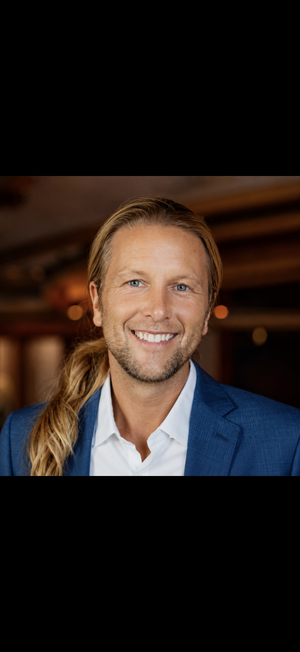
Dillon Ayer is a Board-Certified Developmental Alphabioticist and Licensed Massage Therapist based in Delray Beach, Florida. His work explores nervous-system state, stress and protection patterns, brain-body organization and whole-person experience through hands-on practice and practitioner observation.
This article reflects personal experience and practitioner observations and is provided for educational purposes. It does not diagnose, treat or provide medical advice regarding vision or eye health. Vision changes and concerns about eye health should be evaluated by an appropriately qualified eye-care professional.
BrainReboot.org brings that accumulated hands-on experience into an evolving educational library exploring the relationship between the brain, nervous system, stress response, and the way the body organizes itself.
Continue Exploring:
How to Get Out of Fight-or-Flight…
Explore how stress and protection can narrow attention, change breathing, and influence the way the nervous system responds to the world.
Why Does One Side of the Body Feel Different?
A practitioner perspective on asymmetry, protection patterns, and how nervous-system state can influence whole-body organization.
Brain Fog, Chronic Stress, and the Hidden Stress Load in the Body
Explore how accumulated stress can affect clarity, attention, energy, and the way the body organizes itself.
Nervous System Reset — Delray Beach
Learn more about the BrainReboot.org approach to nervous-system reset and Alphabiotic Alignment in Delray Beach.
Exploring the relationship between the brain, nervous system, stress response, perception, and the way the body organizes itself.
Practitioner observations, nervous-system education, and Alphabiotic Alignment from Delray Beach, Florida.